If you need a fast answer: most SMEs should pick based on setup time, price, and how much follow-up their managers can handle. In this list, lighter tools like Officevibe, AttendanceBot, and Stribe fit smaller teams, while Culture Amp, Qualtrics, and Peakon fit larger SMEs with more HR support. Prices in the article range from free or about $4 per user/month to $20,000+ per year for enterprise-style platforms.
I’d break the article down like this:
- Best for small teams: AttendanceBot, Officevibe, Stribe
- Best for deeper survey and text analysis: Culture Amp, Qualtrics, Leapsome
- Best for change tracking and turnover risk: Peakon, Leapsome, Eletive, 15Five
- Best for Slack or Teams-first workflows: AttendanceBot, Officevibe, Peakon
- Best for custom builds: MonkeyLearn, IBM Watson NLU, Google Cloud Natural Language
What matters most here is simple:
- Setup speed: from minutes to 8 weeks
- Pricing: from free, $4–$5 per user/month, up to custom annual contracts
- Feedback sources: surveys, Slack, Teams, SMS, comments, and chat data
- Analysis depth: basic mood scoring vs. topic clustering, alerts, and attrition models
- Privacy: many tools use a 5-response minimum before showing team results
What is Employee Sentiment Analysis?
Quick Comparison
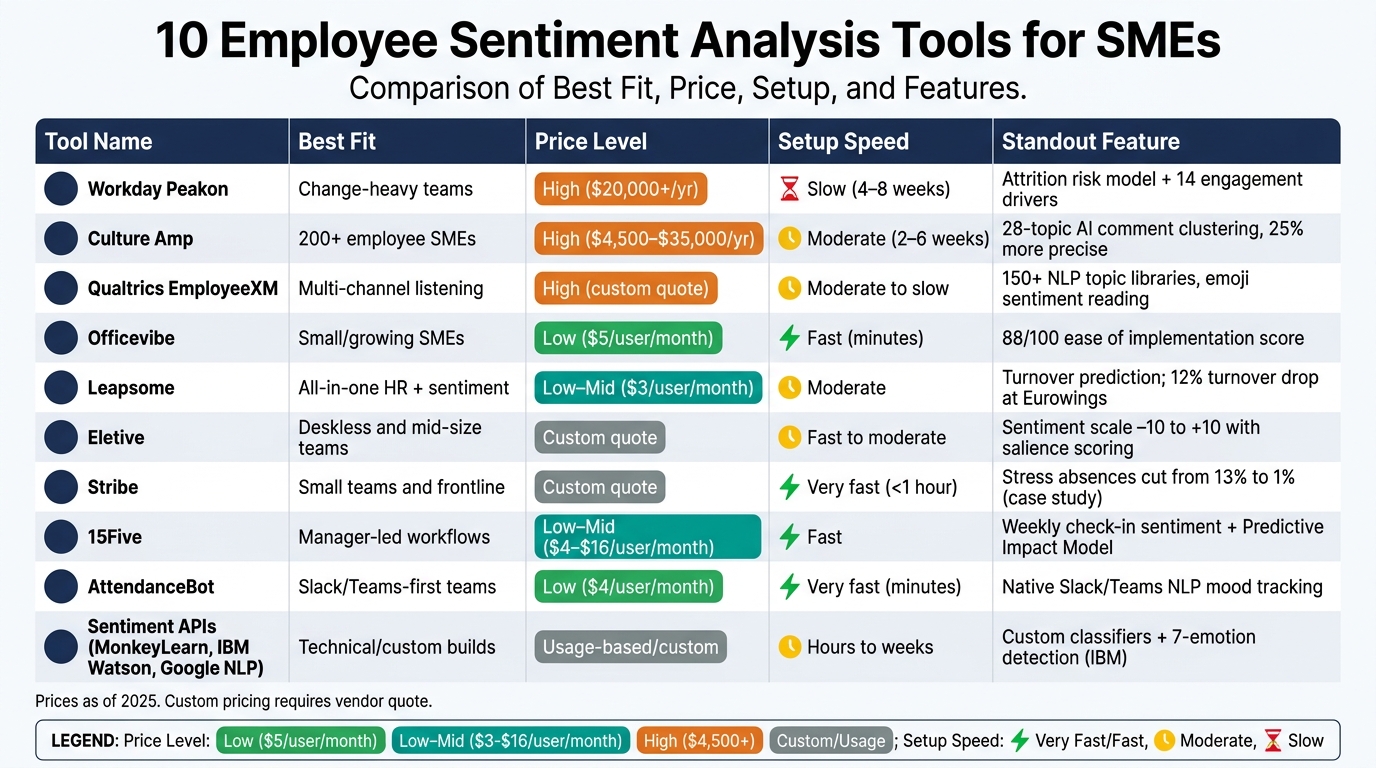
10 Employee Sentiment Analysis Tools for SMEs: Feature & Pricing Comparison
| Tool | Best fit | Price level | Setup |
|---|---|---|---|
| Workday Peakon | Change-heavy teams | High | Slower |
| Culture Amp | 200+ employee SMEs | High | Moderate |
| Qualtrics EmployeeXM | Multi-channel listening | High | Moderate to slower |
| Officevibe | Simple pulse surveys | Low | Fast |
| Leapsome | All-in-one HR + sentiment | Low to mid | Moderate |
| Eletive | Deskless and team health checks | Custom | Fast to moderate |
| Stribe | Small teams and frontline feedback | Custom | Fast |
| 15Five | Weekly manager workflows | Low to mid | Fast |
| AttendanceBot | Slack/Teams mood checks | Low | Very fast |
| Sentiment APIs | Custom pipelines | Usage-based/custom | Varies |
Bottom line: if your team wants a tool people will start using this month, go light. If you need deeper comment analysis, manager dashboards, and risk flags, expect more setup, more cost, and more HR time.
What SMEs Should Look for in Employee Sentiment Tools
Use these filters to narrow the tools below. For SMEs, the sweet spot is pretty clear: you want something fast to roll out, easy on the budget, and simple enough that managers can turn feedback into action without leaning on a full analytics team. If a tool needs a specialist just to explain the dashboard, it’s probably the wrong fit.
Fast setup matters more than it may seem. Every week you delay launch is another week without a feedback loop. Many SME-focused tools can go live in under 30 minutes [3], and some start surfacing action-focused insights within 1–2 weeks [11][2]. That’s why self-serve onboarding and public pricing are worth looking for. It also helps to meet people where they already work. Sending pulse surveys through Slack or Microsoft Teams, instead of asking employees to log into yet another system, can push participation above 85% [3]. And if your team includes frontline or deskless workers, mobile-first access or SMS delivery is a must. Otherwise, you’re only hearing from office staff [1].
Privacy can’t be an afterthought, especially on small teams. Team-level results should appear only after at least five responses [8][3]. That minimum helps people feel safe enough to answer honestly. It’s also smart to pick tools that strip out personal data before analysis, not just in the final report [7]. For U.S. teams, look for CCPA-ready data handling and certifications like SOC 2 Type II or ISO 27001 [1][6][9].
Price matters too, of course. Budget tools usually land around $4–$5 per employee per month, while mid-market options tend to sit between $9–$14 per employee per month [5]. Some vendors keep things simple with flat monthly plans, such as about $49/month for teams of up to 15 people and roughly $199/month for up to 150 employees [11]. If there’s a free tier for 10 to 15 employees, that’s worth a test drive before you commit [10][4][5]. The big thing to watch is whether pricing stays predictable as headcount grows.
These criteria set up the tool-by-tool reviews that follow.
1. Workday Peakon Employee Voice
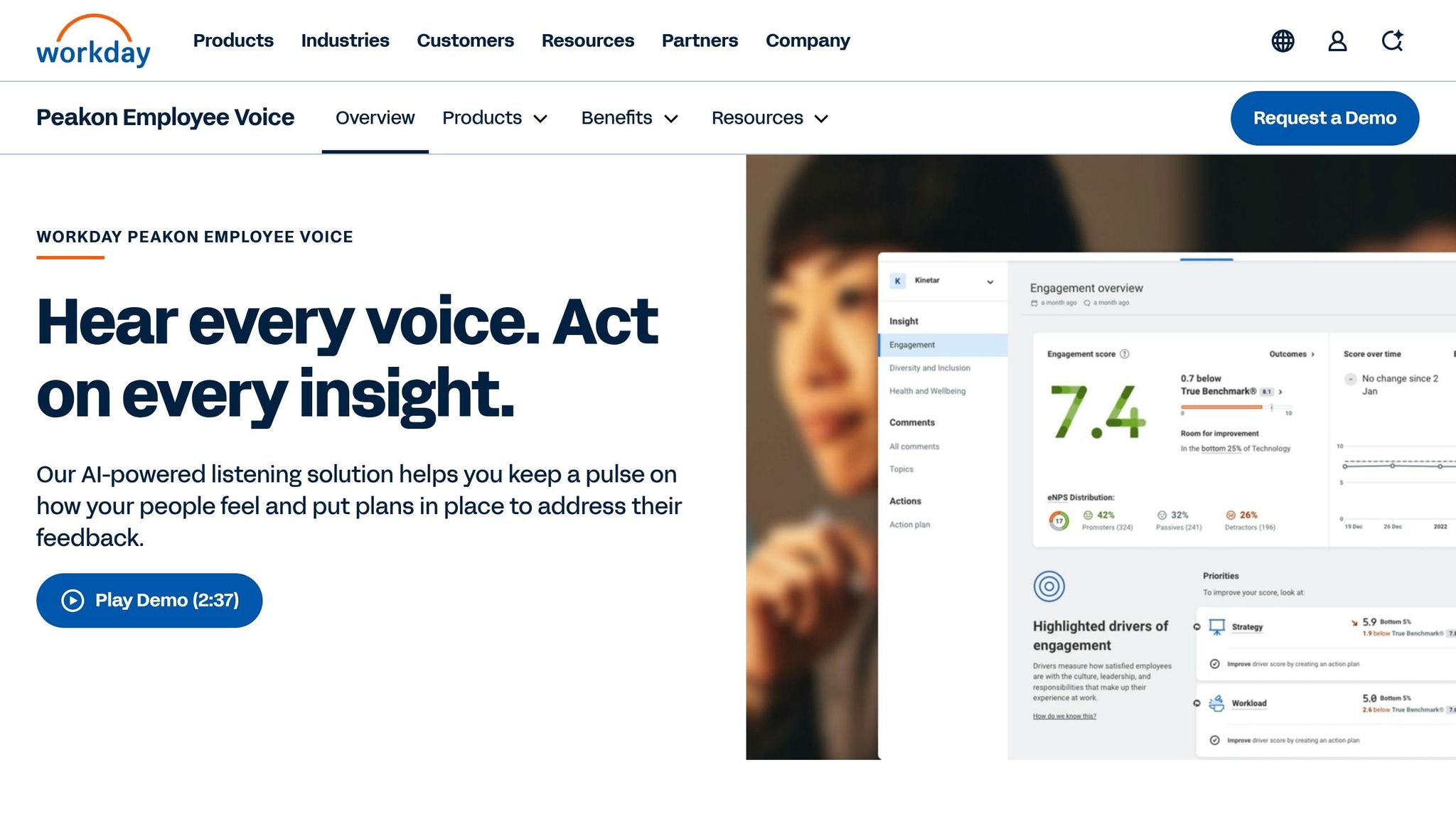
Workday Peakon Employee Voice sends confidential weekly or biweekly surveys through email, SMS, Slack, or Microsoft Teams, and it supports 60+ languages [12][13]. It also looks at open-text responses with NLP and generative AI, then groups comments and tags sentiment as mostly positive, slightly positive, mixed, slightly negative, or mostly negative [14].
One part stands out: the dedicated "Transformation & Change" question set. It helps HR track how people feel during reorganizations and policy shifts [13]. So if a company is implementing AI in an SME or undergoing other big internal changes, Peakon gives teams a steady read on employee mood instead of guesswork.
Executives get organizational heatmaps, while managers see team-level scores and driver analysis that shows which of the 14 engagement drivers matter most for their team [16]. The platform also includes an attrition model that flags flight risk based on falling response rates, shorter replies, and sentiment trends [16][17]. And when employees leave anonymous comments, managers can respond inside the platform [12][15].
A Forrester study reported 224% ROI [12].
Setup usually takes 4–8 weeks, and full adoption tends to take 3–6 months. Pricing is custom, with a minimum annual commitment of around $20,000, plus $10,000 to $30,000 in implementation fees [18][19][20]. In plain English, that puts Peakon in a better spot for mid-size SMEs and scale-ups than for very small teams.
Best for change-heavy teams that need structured feedback, manager-level dashboards, and predictive alerts.
2. Culture Amp
If you need deeper survey analysis instead of simple weekly pulse checks, Culture Amp is the better fit. It comes with 40+ science-backed survey templates built with organizational psychologists. Those templates cover engagement, pulse, DEI, onboarding, and exit feedback [21][25].
As of May 2025, Culture Amp uses a large language model (LLM) to review open-text responses. It groups comments into 28 topics, including Workload, Leadership, and Wellbeing, then tags each one as positive, negative, or mixed [23][24]. The updated model is 25% more precise than earlier versions [23][24]. In plain English, that means less time digging through comment piles and more time seeing where problems keep popping up. It tends to work best for teams running structured engagement programs with managers expected to follow up.
A few tools stand out here:
- The Topic Sentiment Chart shows which topics drive the most negative feedback and which ones come up most often [23].
- AI Comment Summaries shorten open-text feedback into key themes by question [22][24].
- AI Coach turns survey results into action plans and draft messages [21][22].
- Focus Agent flags the questions most likely to improve engagement [26].
That said, the deeper analytics only pay off if your HR team has enough time and headcount to do something with the data [30][31].
For SMEs, the main tradeoff is analytics depth vs. budget. Setup usually takes 2 to 6 weeks, and native integrations with Workday, BambooHR, ADP, and SAP SuccessFactors can automate much of the demographic mapping [25][27]. Pricing also climbs fast as your team grows. Small teams with 15 to 75 employees can expect to pay about $4,500 to $9,000 per year for the Engage module, while mid-market companies with 200 to 500 employees usually land in the $20,000 to $35,000 per year range [25]. Contracts are billed annually, with a minimum of about $10,000 [28][29]. So while the platform offers a lot, it’s a much better match for scale-ups with a dedicated HR owner than for very small teams.
Best for U.S. SMEs and scale-ups with 200+ employees that want deep engagement benchmarks, manager-facing action tools, and AI grounded in 1.5 billion data points [22].
3. Qualtrics EmployeeXM
Qualtrics pulls feedback from surveys, Slack, Teams, Glassdoor, HR tickets, and email, then sorts it into themes, sentiment, emotions, intent, and effort. It even reads emojis. Under the hood, it uses NLU and more than 150 topic-specific libraries to make sense of what people are saying.
The dashboards change based on who’s looking at them. Executives get summary views and ROI snapshots. Managers see team trends and can drill down by office, region, or function. Manager Assist uses generative AI to sum up feedback and suggest talking points for one-on-ones [32]. If sentiment drops in a department, xFlow can automatically send alerts, push notifications, or open tickets.
If you want a simpler rollout, EX25 XM is the cleanest place to start. It’s also the lightest entry point for teams that want less setup work. Instead of a long survey, it uses a shorter, scientifically validated question set built around five core KPIs:
Add automated lifecycle surveys for onboarding and exit milestones, and you can cut manual admin from day one.
Kroger used listening surveys at scale to track sentiment and improve retention.
There is a tradeoff here. Qualtrics gives you setup wizards and pre-built templates, but it tends to fit best when an HR operations team has time to run it well. Pricing is quote-based, with no public tiers and no self-serve free trial, which can slow budget approval [32].
Best for scale-ups and larger SMEs with dedicated HR operations staff that need multi-channel listening, automated alerting, and deep NLU-powered sentiment analysis. It’s also a strong fit for teams in regulated industries that need FedRAMP High and HIPAA certifications [32].
4. Officevibe by Workleap
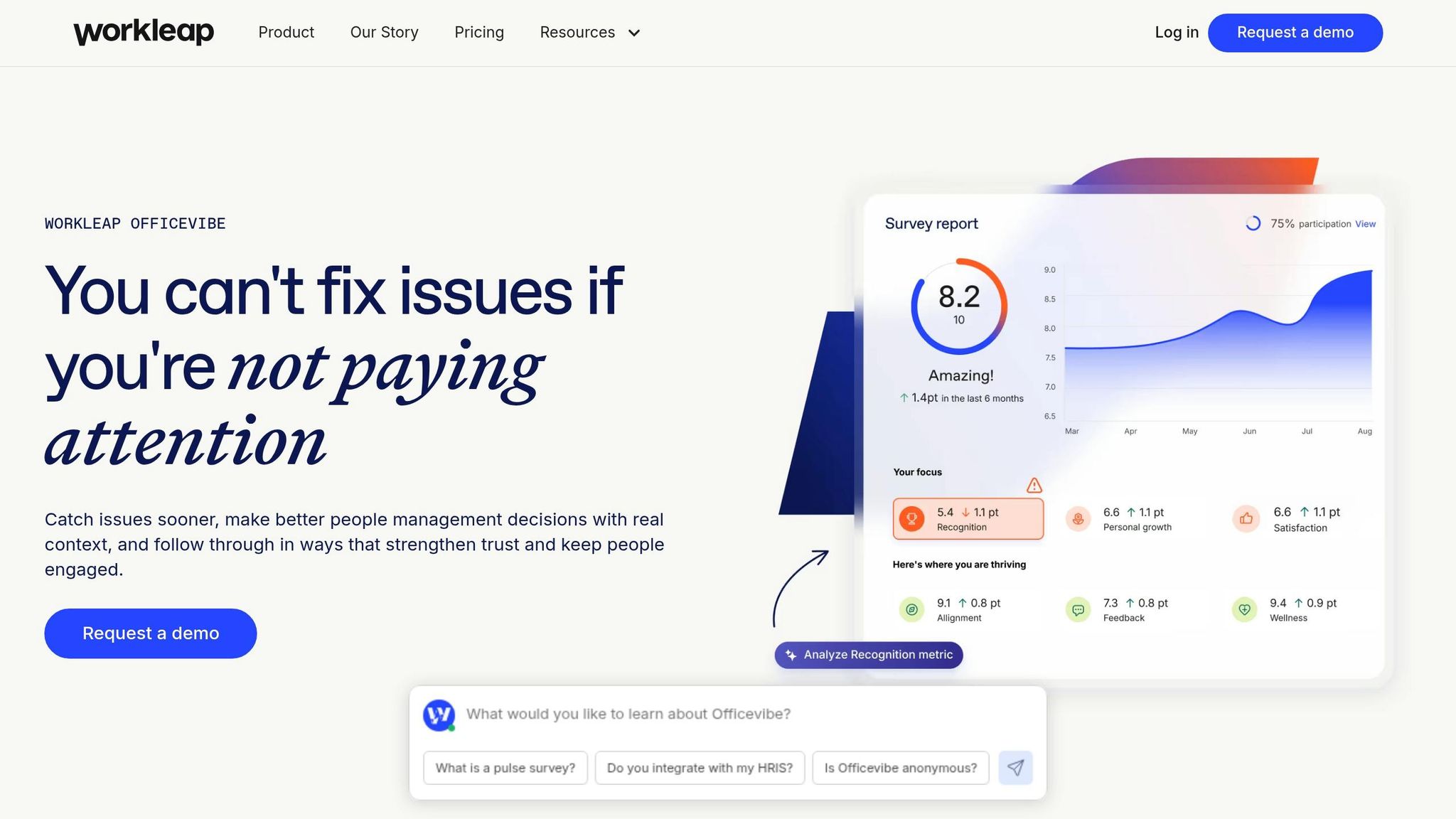
For SMEs that want a lighter setup and less admin work than Qualtrics, Officevibe is a cleaner pick. It blends weekly or biweekly pulse surveys with always-on feedback, so teams can keep a steady read on how people feel. The platform tracks sentiment across core areas like manager relationship, recognition, wellness, and alignment. It also sorts open comments as positive or constructive, and managers can reply anonymously [37].
Officevibe keeps the day-to-day side of employee feedback pretty simple. Smart Reports show managers where sentiment is shifting, while the Turnover Report helps HR spot signs of disengagement during reorganizations [38][39]. On top of that, Slack and Microsoft Teams integrations make rollout easier, and the Pulse Heatmap lets HR filter results by department, tenure, or location [35][36].
Setup is quick. HRIS provisioning automates employee sync, and users rated the platform 88/100 for Ease of Implementation [40].
Pricing starts at $5 per user per month with a 10-user minimum. Officevibe covers sentiment and recognition, but not performance management. That makes it a good fit for teams that need steady pulse checks while the company is growing or going through change.
Best for SMEs that want fast rollout, clear manager action, and predictable pricing.
5. Leapsome
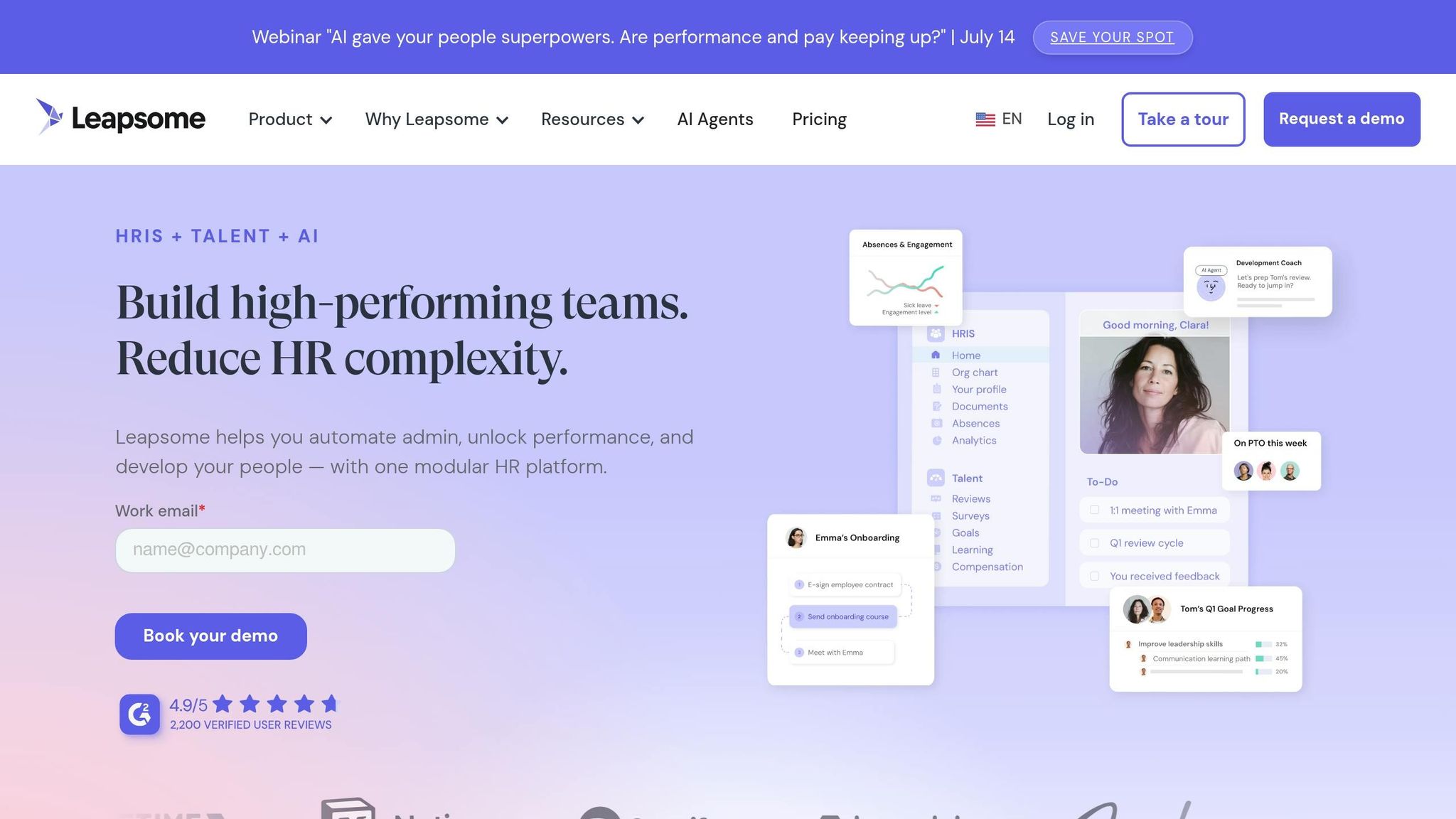
Leapsome is a good fit for teams that want more than basic pulse surveys. It pushes employee listening into a broader HR workflow, following a structured AI integration checklist for better results, with automated pulse, engagement, onboarding, and project surveys built from research-backed templates. It also sorts open-text comments into positive, neutral, or negative, which gives HR teams a faster read on how people feel [41][42][45].
What stands out here is how much analysis sits inside the product. The built-in Culture Advisor spots early shifts in sentiment, and the Data Analyst groups comment themes so teams can review feedback without digging through every response one by one [41][43]. That can save a lot of time, especially when feedback starts piling up.
Leapsome’s turnover-prediction angle is one of its strongest selling points. The platform includes heatmaps, cross-tabs, trend lines, and turnover-risk models that help flag at-risk teams before disengagement turns into attrition [44][45][46]. It also uses standard deviation to surface divisive topics. In plain English, that means HR can see where opinions are split instead of just looking at average scores.
Another useful feature is Anonymous Conversations. Teams can follow up privately with respondents to get at the "why" behind a piece of feedback, without removing anonymity [41][45]. That’s a smart middle ground. You get more context, but people can still speak freely.
There’s also a case study worth noting: Eurowings Digital reported a 12% drop in turnover after using Leapsome [47].
Pricing starts at $3 per user per month, which puts it within reach for smaller SMEs and growing teams using essential AI tools for growth, not just large companies [42][43]. That matters if you want one system that handles feedback, manager follow-up, and change tracking instead of stitching together a bunch of separate tools.
Best for SMEs and scale-ups that want deep sentiment analysis, predictive turnover insights, and an all-in-one HR platform for engagement, change tracking, and feedback.
sbb-itb-bec6a7e
6. Eletive
Eletive is a solid pick for teams that want fast pulse surveys and a way to hear from deskless workers too. It gathers feedback through automated pulse surveys, custom mini-pulses, and lifecycle surveys for moments like onboarding and exit. It also includes a Kiosk mode for employees who don’t have a company email [48][54]. On top of that, Eletive uses ready-made templates, instant dashboards, and Survey Intelligence to automate follow-up questions.
What stands out most is Comments AI. It uses NLP to score open-text responses on a sentiment scale from -10 to 10 and adds a salience score to show how central a topic is [51][52]. In practice, that means you can spot what people feel and what matters most. The platform shows themes as bubbles, with size based on frequency and color based on sentiment. To help protect anonymity, Eletive recommends having at least 5 comments per theme before running an analysis [51].
Eletive also gives managers and HR real-time alerts for issues like stress, bullying, or harassment. From there, they can move from heatmaps into anonymous comments for more detail [50][52][53]. Employees get their own dashboards as well, along with AI-driven advice, which takes some of the engagement work off HR’s plate [49][54]. That setup makes Eletive handy during reorganizations, policy rollouts, and repeat team-health checks.
Pricing is based on custom quotes across the Essential, Standard, and Professional tiers [48][55]. The full Comments AI suite, attrition risk prediction, and smart suggested actions are limited to the Professional plan [48]. Eletive also starts at 50 employees [55], which puts it in a good spot for mid-sized SMEs and scale-ups.
Best for mid-sized SMEs and scale-ups running change programs, team health checks, or deskless feedback loops.
7. Stribe
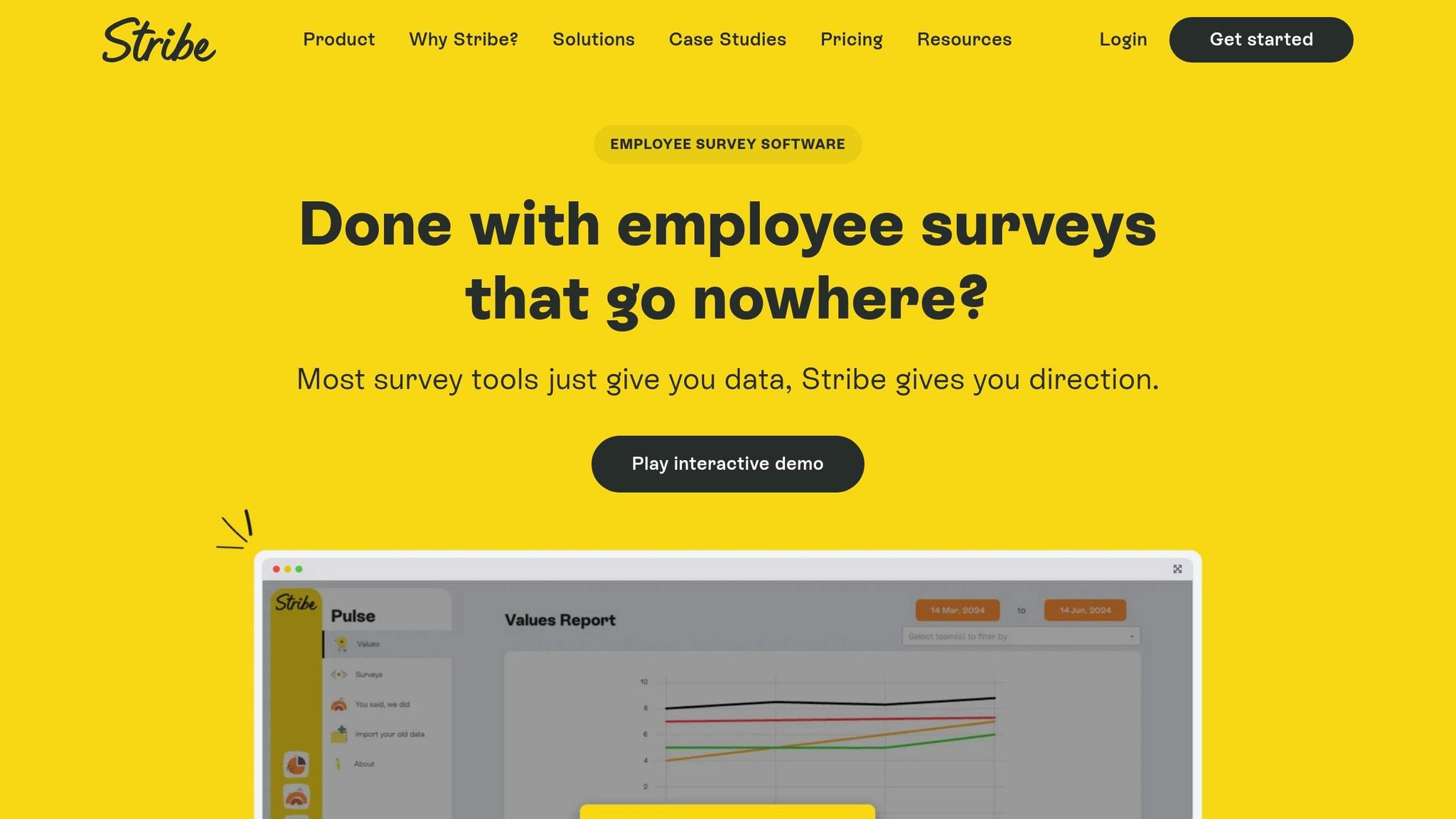
Stribe is a good fit for teams that want something lighter and faster than the bigger platforms listed above. The focus here is simple: get feedback fast, spot what matters, and show people what happens next.
It’s built with smaller teams in mind. You get short pulse surveys with 5–10 questions, an always-on Anonymous Messenger, and exit surveys. That setup works well for change projects, wellbeing check-ins, and manager feedback loops. Employees can reply through email, QR code, Slack, Microsoft Teams, or the mobile app.
On the analysis side, Stribe’s AI tags response tone, spots repeated themes, and turns results into a plain-English summary without manual review. That saves time, especially for lean HR teams that don’t have hours to sort through open-text comments.
The dashboards keep things easy to scan. You’ll find heatmaps, trend lines, and a Values Tracking view that groups tagged questions around priorities like burnout or leadership trust. One feature that stands out is "You Said, We Did." It lets HR share specific results next to a clear action plan. That matters, because when people can see follow-through, they’re more likely to keep taking part and give honest feedback.
For SMEs, the draw is speed paired with accountability. Most small businesses can go live within an hour with a 30-minute demo, HRIS import, and a first template survey. Teams usually get their first actionable insights in about 14 days. Wigan and Leigh College used Stribe to cut stress-related absences from 13% to 1% [56].
Pricing for U.S. teams is quote-based. The Starter plan covers 5–50 employees, and the Growth plan covers 51–200 employees. One-off survey projects are also available for teams that aren’t ready for a subscription [57].
Best for small and mid-sized teams that want fast setup, low admin work, and visible follow-through during change or wellbeing initiatives.
8. 15Five
For teams that want sentiment tracking inside the normal weekly manager rhythm, 15Five brings check-ins, pulse surveys, and lifecycle feedback into one flow. Every Check-in starts with the question: "How did you feel at work since your last Check-in?" Employees answer on a 1–5 scale and can add a written comment if they want [59][60].
That setup gives managers a steady read on how people are doing, instead of pushing sentiment into a separate reporting tool. On top of that, AMAYA groups open-text feedback into themes and priorities, while the Predictive Impact Model points to the engagement factors most likely to improve performance and retention [58]. For teams going through a lot of change, that link between day-to-day management and sentiment data can make a big difference.
The main upside here is follow-up. Managers can track scores and trends at the individual, team, or company level in the Pulse Dashboard. HR can use the HR Outcomes Dashboard to catch early signs tied to performance, turnover, and goal shifts [62][60].
15Five also keeps setup fairly light with integrations for Workday, BambooHR, ADP, Slack, Microsoft Teams, Jira, and Salesforce. It’s quick to deploy, although larger rollouts can add $5,000 to $25,000+ in professional services, depending on implementation size [63][64].
Pricing breaks down like this:
- Engage: starts at $4/user/month
- Perform: $11/user/month and adds Weekly Check-ins, Pulse, 1-on-1s, and AI-assisted reviews
- Total Platform: $16/user/month and adds the HR Outcomes Dashboard and manager training [61]
Best for: U.S. SMEs and scale-ups with about 100 to 1,000 employees that want continuous sentiment data built into weekly workflows.
9. AttendanceBot
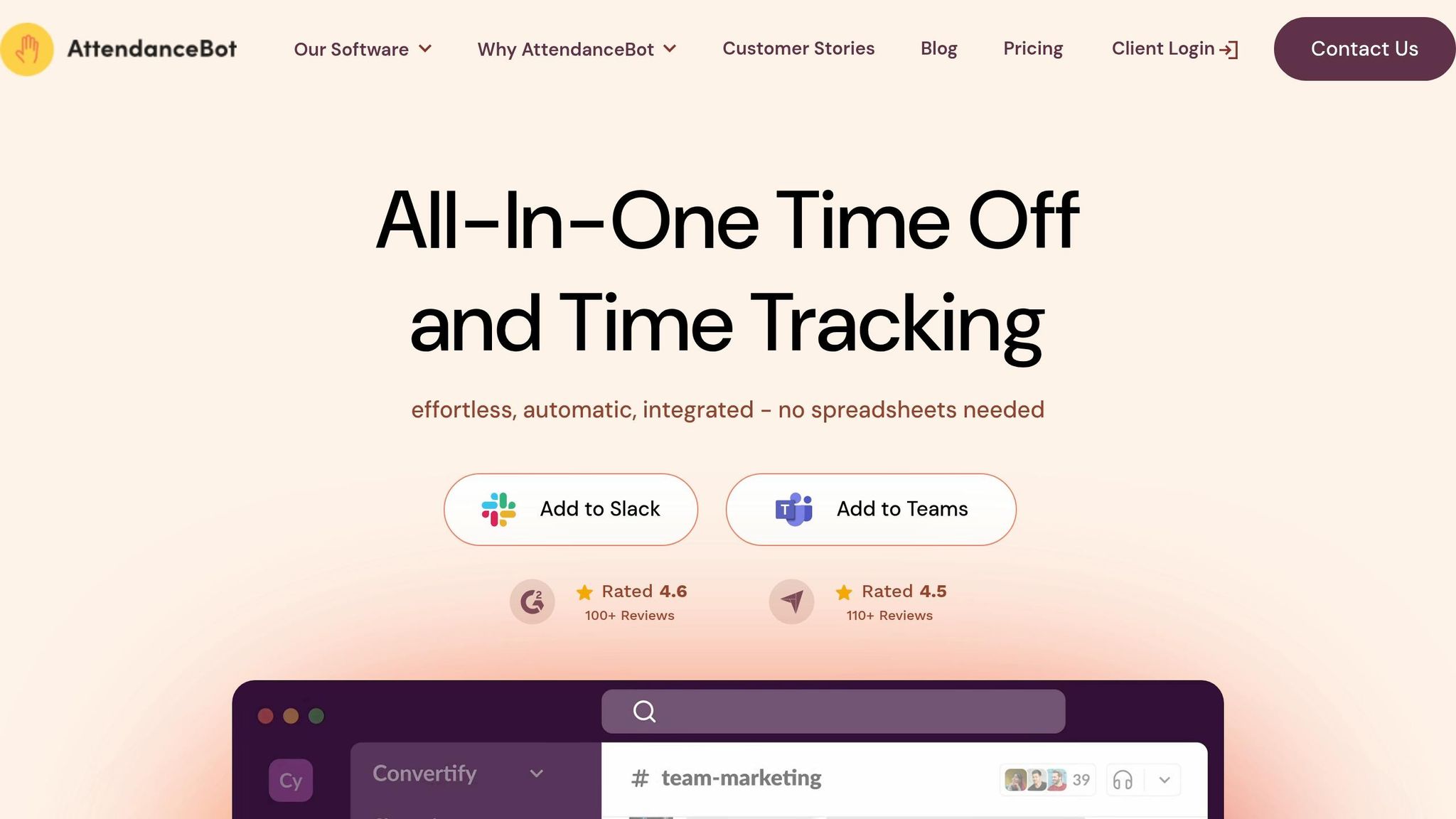
For teams that want sentiment checks inside Slack or Microsoft Teams instead of adding one more survey app, AttendanceBot is the lightest pick here. It brings AI-powered pulse surveys and feedback collection straight into those tools, with NLP that looks at tone, keywords, and context to spot meaningful shifts in sentiment across check-ins and chat messages [65][66].
It assigns sentiment scores at the individual, team, and company levels. The dashboard shows morale trends by team and department, and alerts can flag disengagement and fatigue early [65][66]. That gives managers a simple way to catch stress patterns before a dip in morale spreads.
Setup is simple too. AttendanceBot can be added to Slack or Teams in minutes, with no IT help needed [68]. It also automates prompts and follow-ups, which helps keep response rates high without adding much admin work.
Pricing starts at $4 per user/month billed annually, and there’s a free tier plus a 14-day trial [67]. For SMEs, that makes it a practical option if they want low-friction sentiment tracking without changing how people already work.
Best for: SMEs already using Slack or Teams that want lightweight sentiment tracking inside daily workflows.
10. AI-Powered Sentiment APIs (MonkeyLearn, IBM Watson NLU, Google Cloud Natural Language)
For teams that want to build their own setup, APIs give you the most flexible way to add sentiment analysis. They power custom feedback analysis when packaged HR tools feel too limiting. This route makes sense for lean technical HR ops teams, product-led scale-ups, or data-savvy people teams that want custom sentiment rules and tighter integrations - especially during reorganizations, policy changes, or high-volume feedback cycles.
MonkeyLearn adds Google Sheets-based analysis and custom classifiers. IBM Watson NLU adds emotion detection across up to seven emotions: joy, admiration, gratitude, anger, sadness, disgust, and fear, with a Lite tier that includes 30,000 NLU items per month [71]. Google Cloud Natural Language can slot into custom survey workflows [69]. Setup can be as simple as a no-code spreadsheet workflow or as hands-on as a developer-led API build.
The tradeoff is pretty simple: setup and upkeep fall on your team. You have to build the dashboards and action workflows yourself [69][70]. If you add negative-emotion alerts, you can flag high-risk feedback such as anger or extreme dissatisfaction [1]. Event markers also help you track sentiment changes after a policy update or leadership change [1]. But that upkeep is manual, so these APIs tend to fit scale-ups with technical resources better than lean HR teams.
Best for: Scale-ups with developer resources that need highly customized sentiment analysis, high feedback volume, or integrations that standard HR platforms can't support.
The tradeoff is clear: more flexibility, less convenience. Use the comparison table below to weigh flexibility, setup effort, and cost.
Feature, Setup, and Pricing Comparison Table
After the individual reviews, this table makes the tradeoffs easier to scan. It pulls the SME filters above into one side-by-side view, so you can compare each tool by feedback channel, analysis depth, setup speed, and pricing.
| Tool | Feedback Channels | Sentiment Depth | Dashboards and Alerts | Setup Speed and Pricing | Best Use Case |
|---|---|---|---|---|---|
| Workday Peakon Employee Voice | Surveys and follow-ups | Survey + comment analysis | Advanced dashboards | Slower setup; higher per-user pricing | Ongoing employee listening at scale |
| Culture Amp | Surveys and 360 feedback | Deep analysis and benchmarking | Advanced dashboards and alerts | Slower setup; higher per-user pricing | Change management and culture benchmarking |
| Qualtrics EmployeeXM | Surveys, email, SMS, and 360 feedback | Multi-source NLP and prediction | Custom dashboards and alerts | Slower setup; higher per-user pricing | Broad employee listening programs |
| Officevibe by Workleap | Pulse surveys and Slack/Teams feedback | Basic sentiment scoring | Team-level dashboards | Fast setup; low per-seat pricing | Team-level pulse feedback |
| Leapsome | Surveys, reviews, and check-ins | Engagement scoring and theme clustering | Goals, reviews, and sentiment | Moderate setup; per-seat pricing | Broader engagement and review workflows |
| Eletive | Pulse surveys and regular check-ins | Real-time mood tracking and predictive analytics | Trend views and alerts | Fast to moderate setup; per-seat pricing | Continuous listening and burnout prevention |
| Stribe | Surveys and QR codes | Sentiment scoring and theme tagging | Manager dashboards and alerts | Fast setup; low-cost pricing | Frontline worker feedback |
| 15Five | Weekly check-ins, pulse surveys, and 1-on-1s | Engagement trends and sentiment scoring | Manager-focused dashboards | Fast setup; per-seat pricing | Manager-led team feedback and OKRs |
| AttendanceBot | Slack/Teams mood check-ins and surveys | Basic mood tracking | Lightweight reports | Very fast setup; low-cost pricing | Lightweight daily mood tracking in Slack |
| AI-Powered Sentiment APIs (MonkeyLearn, IBM Watson NLU, Google Cloud Natural Language) | Custom text, surveys, and chat exports | Custom classifiers and emotion detection | Custom-built dashboards and alerts | Hours to weeks; usage-based or custom pricing | Custom sentiment pipelines for technical teams |
If you're running a change program, the deeper platforms usually make more sense. For steady pulse feedback, lighter tools are often the better fit. And APIs? They work best if your team can manage the custom upkeep.
How AI for Businesses Can Help You Find More Tools
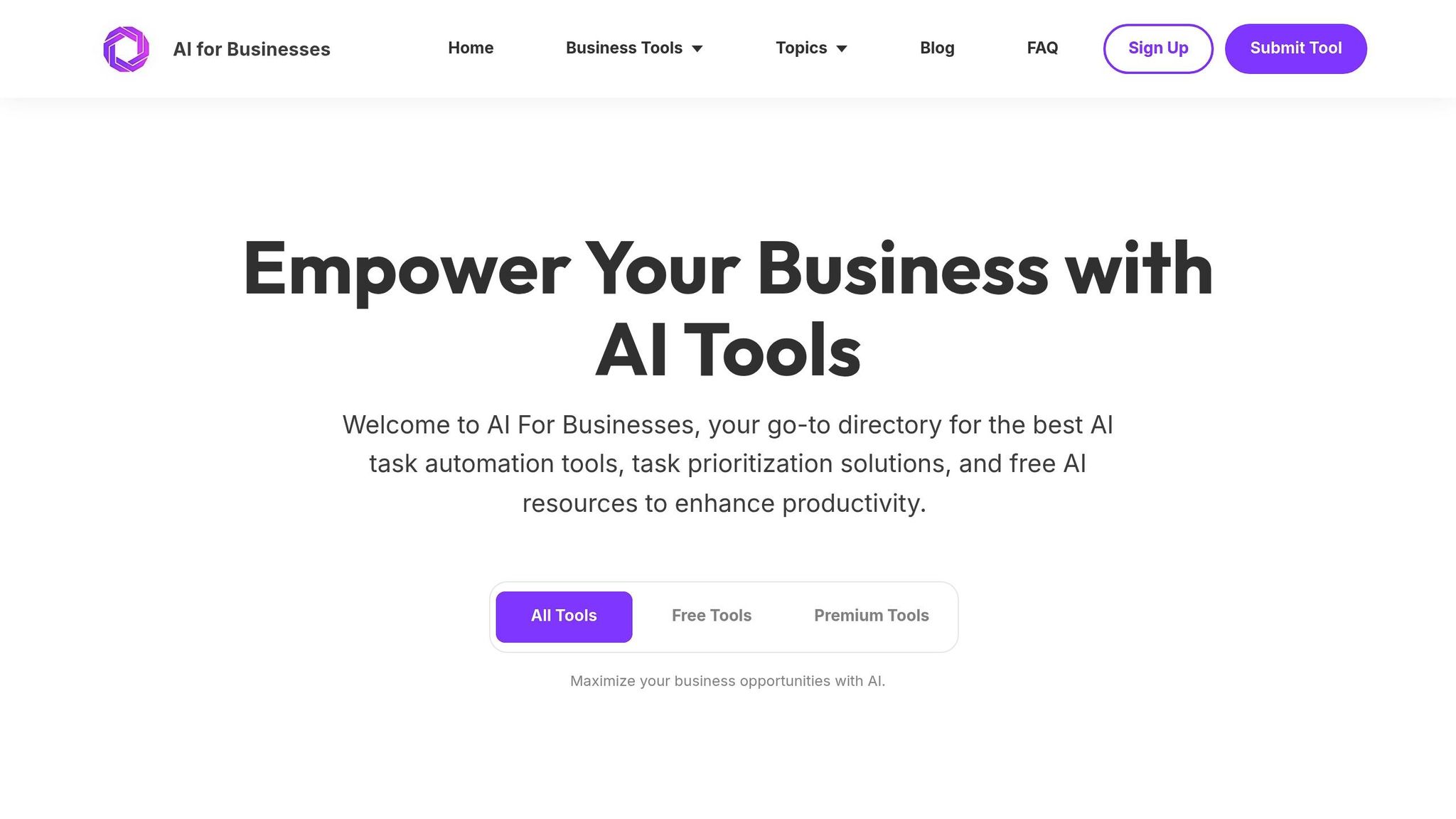
Need a narrower fit for a specific HR or feedback workflow? If none of the 10 tools matches your stack, budget, or day-to-day process, AI for Businesses can help you find more SME-focused AI tools.
AI for Businesses is a searchable directory of AI tools for SMEs and scale-ups, with options for HR and workplace communication use cases. It includes tools with integrations for Slack, Microsoft Teams, BambooHR, HiBob, Deel, Rippling, and ADP, along with always-on feedback tools, conversational AI advisors, and niche sentiment workflows.
The platform offers a free Basic plan and a Pro plan for $29/month with full access and priority support.
You can use it to look for tools built for:
- Slack-native feedback
- HRIS sync
- Niche sentiment workflows
Conclusion
When you stack up depth, setup, and price, the best SME pick comes down to two simple things: how fast you need feedback and how much analysis your team can actually use. Pick the tool that fits the job in front of you right now, whether that means quick pulse checks, better manager visibility, or deeper text analysis.
The main tradeoffs are pretty clear: fast rollout, clear actions for managers, and strong text clustering. Most tools lean harder into one or two of those areas, not all three.
For small teams, three things matter most:
- Fast setup
- Strong anonymity controls with clear aggregation thresholds
- A feedback loop that closes fast
And speed matters after the survey too. Act on survey results within 30 days if you want to improve engagement faster.
There’s no prize for paying for enterprise extras your team won’t touch. Start with a free plan or a low-cost starter option, prove that it works, and then scale.
Use the comparison table to line up each tool with your team size, workflow, and budget.
FAQs
Which tool is best for a small team?
For small teams, SignalHR works well for businesses with 15 to 150 employees. It includes automated monthly pulse surveys, so you can keep a steady read on how people are doing without hiring a dedicated HR team.
Two other strong options are Psyched, which fits teams with 15 to 500 employees, and UnsaidSignals, which is geared toward very small teams of 1 to 15. UnsaidSignals keeps things light with weekly check-ins centered on team health and misalignment.
How do these tools protect employee anonymity?
These tools help protect employee anonymity with built-in safeguards. Before data is processed, they may strip out metadata, IP addresses, and other personally identifiable information.
They also often clean free-text responses to remove identifying details and use minimum response thresholds before results appear. That way, feedback stays grouped at a high level and useful for action, without exposing personal identities.
How much setup and HR time should I expect?
Setup is usually fast for SMEs. In most cases, it takes 2 to 30 minutes to get started, and many tools begin surfacing insights within 2 weeks of the first setup.
The day-to-day HR workload stays low because data collection and reporting run automatically. Employees usually spend just 2 to 5 minutes completing surveys, while managers check dashboards and alerts as needed.
Some tools also include white-glove onboarding for Slack or Teams integrations.