Regulatory reporting is getting more complex, especially for small and medium-sized businesses (SMEs) in the U.S. Manual processes are slow, costly, and prone to errors, making compliance a challenge. AI tools are now simplifying these tasks by automating data validation, creating audit trails, and ensuring compliance with regulations like SEC, SOX, and CCPA. Here’s a quick rundown of seven AI tools that can help businesses streamline their reporting processes:
- Workiva: Automates SEC filings, iXBRL tagging, and integrates with 150+ systems for real-time updates.
- DataSnipper: Enhances Excel with AI for financial statement checks, SOX compliance, and audit trails.
- MindBridge: Analyzes every transaction with AI to detect risks and ensure compliance with U.S. and global standards.
- Datarails: Centralizes Excel workflows, syncing data from 600+ sources while tracking changes for compliance.
- IBM OpenPages with Watson: Uses AI to automate regulatory updates, map controls, and manage compliance workflows.
- Alyne by Mitratech: Offers no-code workflows to manage GRC tasks, map policies to standards, and create audit-ready reports.
- Fairly AI: Focuses on AI system compliance, automating reports for frameworks like the EU AI Act and NIST AI RMF.
These tools reduce errors, save time, and improve compliance accuracy. Businesses can start small, test one or two tools, and expand based on their needs. With AI, regulatory reporting can go from weeks to minutes, cutting costs by up to 90% while ensuring audit readiness.
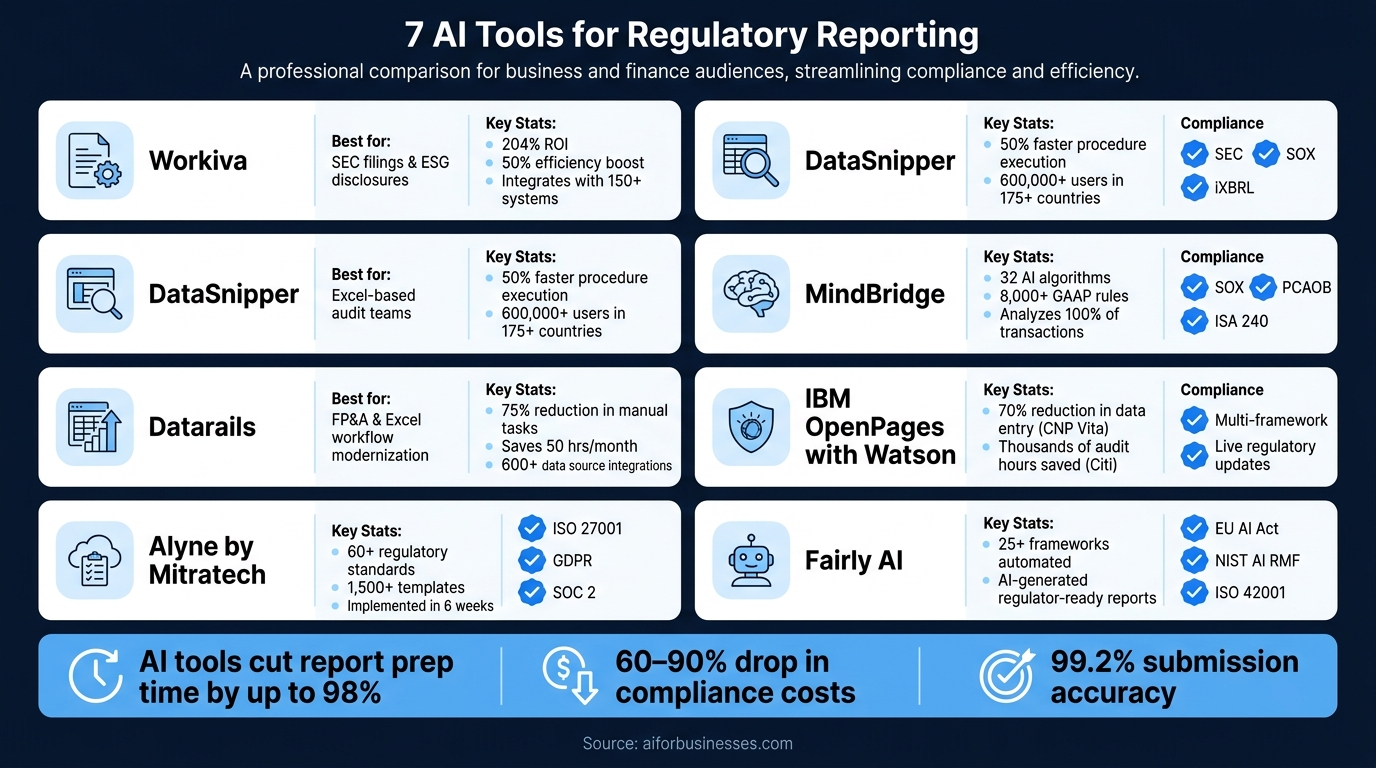
7 Best AI Tools for Regulatory Reporting: Features at a Glance
ISDA Animation: Using AI to Enhance the ISDA Digital Regulatory Reporting Solution
sbb-itb-bec6a7e
1. Workiva
Workiva is a cloud-based platform designed for regulatory reporting, trusted by 100% of Global Systemically Important Banks (G-SIBs). Its widespread use underscores its reliability in critical regulatory tasks. For small and medium-sized enterprises (SMEs) managing SEC filings, SOX compliance, or ESG disclosures, Workiva offers a suite of AI-powered tools that simplify complex processes - no large compliance team required.
The platform’s AI features streamline tedious reporting tasks, such as:
- Drafting Management's Discussion and Analysis (MD&A) summaries and risk factor disclosures directly from tabular data.
- Automating iXBRL tagging for SEC filings using machine learning.
- Providing natural language search capabilities for past reports and peer filings.
Workiva also includes an AI assistant, Anna, to help users navigate the platform effectively. According to a Forrester Consulting study, Workiva users experienced a 204% return on investment (ROI), with teams reporting a 50% boost in efficiency thanks to automated workflows.
Seamless Integration and Real-Time Updates
Workiva integrates with over 150 systems, including ERPs, general ledgers, and treasury platforms, through APIs. This integration ensures that any changes to source data automatically update across all linked spreadsheets, documents, and presentations. By eliminating version-control issues, Workiva guarantees consistency and accuracy in filings.
Enhanced Compliance Through Audit Trails
The platform’s audit trail functionality provides a timestamped record for every data point, linking it back to its source. This feature ensures compliance with regulatory standards, especially for high-stakes reports like stress tests.
Real-World Impact
Bancolombia, for example, used Workiva to streamline its Form 20-F filings. The result? Data collection time dropped from 79 days to just 34 - a 57% improvement - while operational risk decreased by 70%.
"We've seen how repeatable, manually intensive work can be cut down dramatically [with Workiva AI]. That's time we can reinvest into strategic initiatives or higher-order risk analysis." - Ina Narula, Chief Risk Officer, Amalgamated Bank
Workiva’s ability to simplify workflows, ensure data accuracy, and enhance compliance makes it a valuable tool for organizations navigating complex regulatory landscapes.
2. DataSnipper
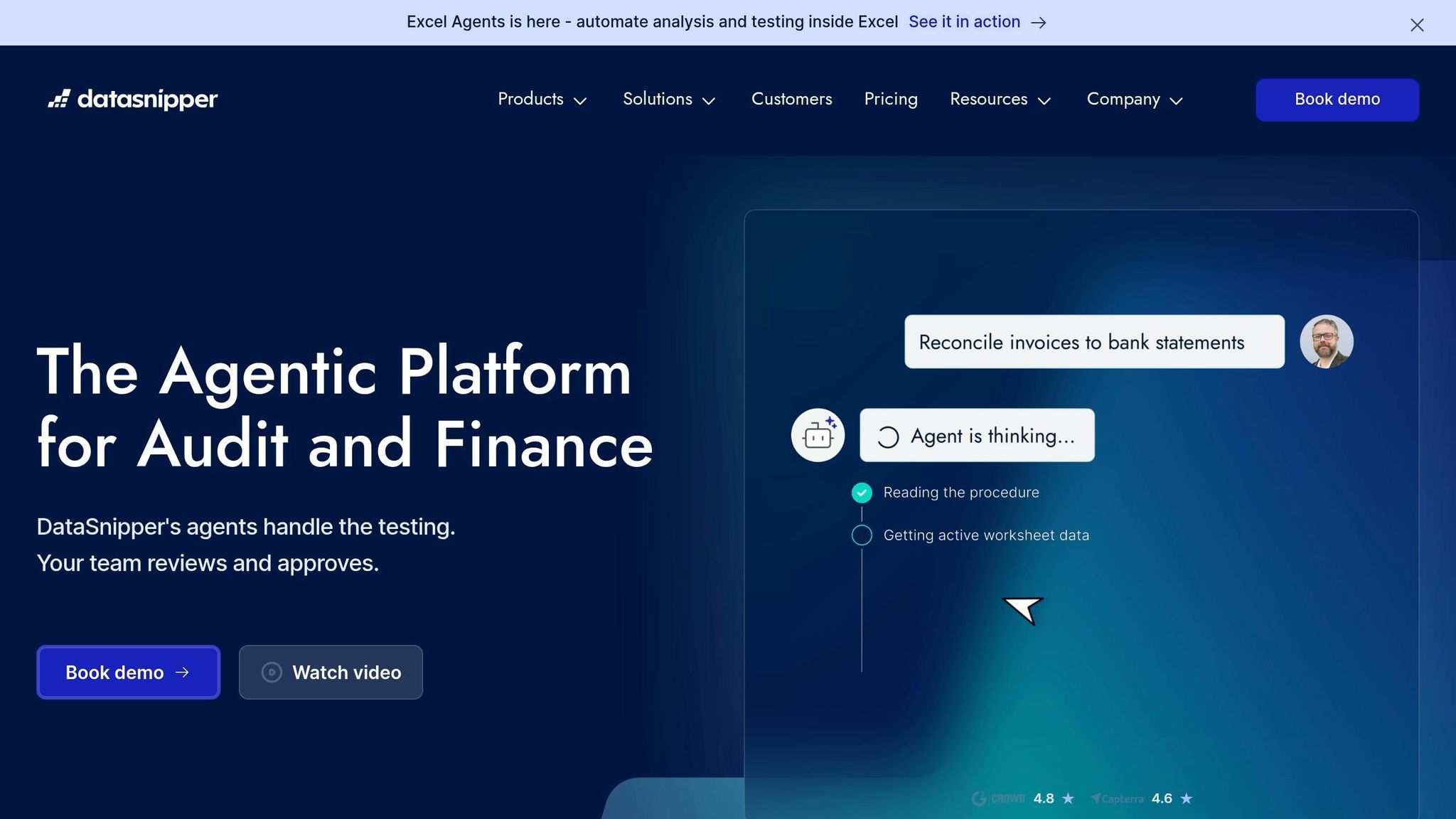
For teams that rely on Excel, DataSnipper offers a seamless integration by adding a dedicated tab within the software. This allows users to automate analysis, testing, and compliance reporting without the hassle of switching between tools. For small and medium-sized enterprises (SMEs) already exporting data from ERP systems into spreadsheets, this integration is a game-changer.
DataSnipper uses AI to simplify complex regulatory reporting. Its Disclosure Agents automatically check financial statements against IFRS and GAAP checklists. Meanwhile, the Financial Statement Suite ensures calculations are accurate, data is consistent internally, and aligns with previous years' reports. For SOX compliance, the tool extracts and cross-references supporting documentation with control testing, saving time and reducing errors.
Built-In Audit Trail
DataSnipper’s standout feature, called Snips, connects every extracted data point to its original source document - whether it’s an invoice, bank statement, or contract. These Snips create a clickable audit trail directly within Excel, making it easy for reviewers to trace numbers back to their origin.
Sarah Morejon, Senior Manager Internal Audit at The ODP Corporation, highlighted its impact:
"With DataSnipper, we're able to ensure accuracy and completeness during testing. All the evidence and sample data are in a centralized workspace. Cross-referencing accelerates review processes. Audit trail make the entire review process simple, and we can be sure that we don't miss anything." - Sarah Morejon, Senior Manager Internal Audit, The ODP Corporation
The time savings are impressive as well. Ariana Balda, an Auditor at The ODP Corporation, shared that using DataSnipper’s templates for SOX controls and operational audits has cut procedure times in half:
"DataSnipper helps us ensure that every attribute is captured in our testing. The ability to create templates significantly contributes to time savings for us as preparers, resulting in procedures now being executed 50% faster." - Ariana Balda, Auditor, The ODP Corporation
DataSnipper is trusted by the top 100 accounting firms and over 600,000 users in more than 175 countries. It’s SOC 2 compliant, employs encryption, and ensures sensitive data is secure by automatically deleting prompts and documents after 24 hours - an essential feature for SMEs handling confidential financial information.
3. MindBridge
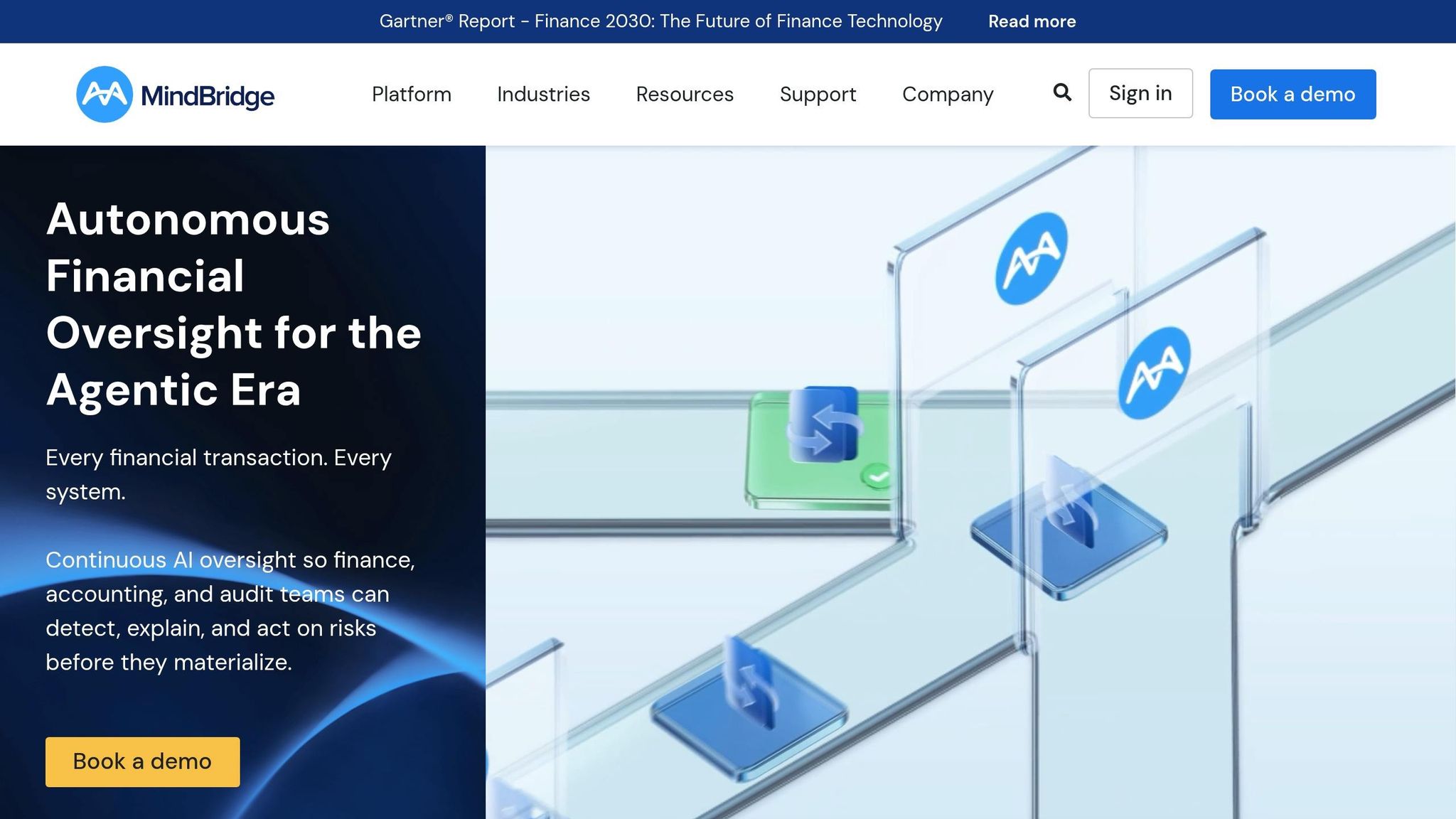
MindBridge brings a fresh perspective to transaction analysis, offering a solution that goes beyond the standard sampling methods used by most audit tools. Instead of reviewing just a portion of transactions, MindBridge examines every single financial transaction - covering general ledgers, payroll, revenue, and vendor invoices. Its Ensemble AI employs a mix of unsupervised machine learning, multivariate regression, and statistical analysis. With 32 algorithms and over 8,000 GAAP rules at its disposal, the platform is designed to detect risks across the board.
One of MindBridge's standout features is its Explainable AI (XAI) framework. Unlike tools that simply flag transactions without much context, MindBridge provides clear, auditable explanations for every risk score it generates. This transparency ensures finance teams have the documentation they need for regulators or external auditors. CEO Stephen DeWitt highlights this unique approach:
"MindBridge is built on ensemble AI and unsupervised machine learning, layered with auditable, explainable algorithms that finance teams, auditors, and regulators can rely on." - Stephen DeWitt, CEO, MindBridge
The platform is built to meet key compliance standards, including SOX (via its AiCFR™ feature), PCAOB AS 2401, AU-C 240, ISA 240, and SSARS No. 25. This makes it a valuable tool for U.S.-based SMEs integrating AI as well as businesses operating under international frameworks. For SMEs using platforms like Snowflake, Databricks, or Microsoft Fabric, MindBridge offers seamless integration through an open API with over 100 endpoints, supporting more than 3,000 ERP systems. Additionally, its Microsoft Fabric integration connects directly to Power BI, enabling finance teams to overlay AI-driven risk insights onto their existing dashboards. Results can be exported as PDFs or .xlsx files, complete with in-line commentary to support audit trails and address management inquiries.
MindBridge also prioritizes security and reliability. It holds certifications such as SOC 2®, SOC 3®, ISO 27001, ISO 27017, and ISO 27018. Its algorithms have undergone independent assessment by Holistic AI, which reviewed them for explainability, robustness, bias, and privacy. This level of third-party validation is rare in the industry, further solidifying its credibility.
Next, we’ll explore a tool that shifts the focus toward financial planning and reporting for SMEs.
4. Datarails
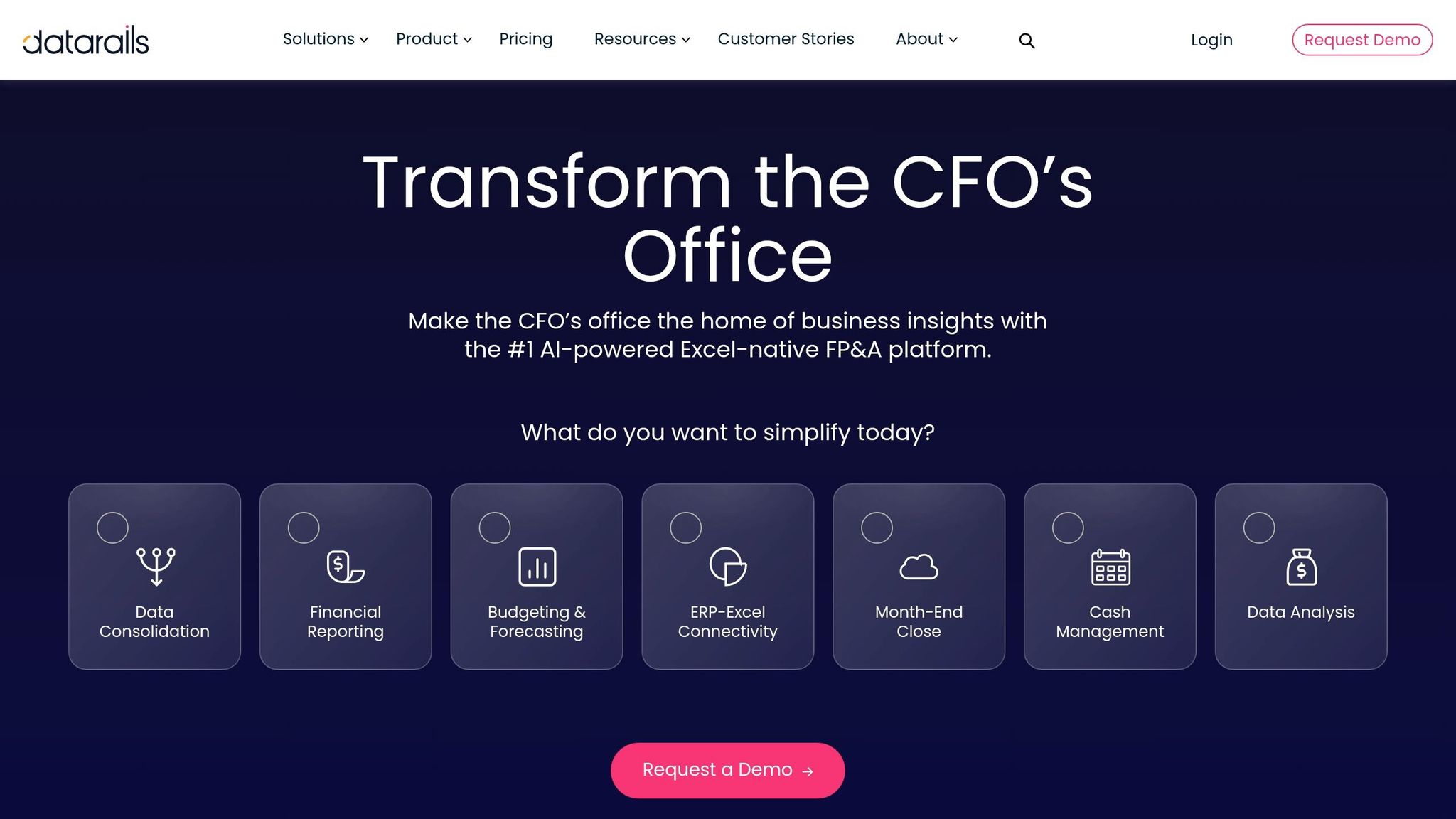
Datarails enhances existing Excel workflows with its Flex Excel add-in, allowing small and medium-sized enterprises (SMEs) to keep their trusted spreadsheet models and logic while introducing a centralized cloud layer. This layer provides governance, version control, and real-time data syncing. For teams that have spent years refining their Excel-based processes, this approach offers a way to modernize without overhauling their established workflows. It’s a practical solution that combines familiarity with advanced data integration and oversight.
The platform brings together data from over 600 sources, including popular ERPs like NetSuite, Sage, and Microsoft Dynamics, along with CRMs, HRIS platforms, and even bank feeds. By consolidating this information into a single, governed source of truth, Datarails eliminates the need for manual copy-pasting and resolves version conflicts - two common culprits behind compliance issues. Users report a 75% reduction in manual spreadsheet tasks and save an average of 50 hours of work per month.
For regulatory reporting, Datarails’ audit trail features are a game-changer. Every change is meticulously tracked, including task statuses, approver names, timestamps, and attached supporting documents. This ensures that all compliance-related evidence is stored in one place. Samantha Cassidy, FP&A Lead at Empower Healthcare Solutions, shared her experience:
"It saves me so much time and having that version control allows us to stop having potentially catastrophic mistakes ever happening again."
In addition to audit trails, the platform uses AI to provide deeper financial insights. Its AI Agents analyze actuals to identify key drivers, suggest actionable recommendations, and even draft narrative variance explanations and compliance commentary. Powered by its FinanceOS layer, Datarails connects with AI platforms like Claude and ChatGPT, grounding its outputs in real financial data for accuracy and relevance.
SME teams can typically get up and running within 4 to 6 weeks, making it an accessible choice for businesses without extensive IT resources. By simplifying both data integration and compliance tasks, Datarails integrates smoothly into the growing suite of AI tools tailored for regulatory reporting.
5. IBM OpenPages with Watson
IBM OpenPages with Watson is a modular, AI-driven GRC (governance, risk, and compliance) platform designed to help businesses navigate regulatory challenges. Its modular structure allows small and medium enterprises (SMEs) to start with a single module and expand as their needs grow.
This platform takes AI integration to another level. It pulls live regulatory updates from trusted sources like Thomson Reuters Regulatory Intelligence, Wolters Kluwer, Ascent, and CUBE. Using its Rules Engine, OpenPages automatically classifies and routes these regulatory changes, triggering workflows without manual intervention. This proactive approach ensures that businesses stay ahead of new regulations by surfacing relevant updates and mapping them to internal controls in real time.
The platform also leverages watsonx.ai for generative AI capabilities, offering responses based on GRC data. Its GRC Canvas provides a visual workspace to model workflows and identify compliance gaps. OpenPages connects seamlessly with systems like ERPs through IBM App Connect and REST APIs while supporting third-party AI models, including OpenAI, Google Gemini, and Anthropic Claude.
One of its standout features is the centralization of regulatory requirements, controls, and evidence into a single repository. OpenPages also includes AI Factsheets, which document the metadata of machine learning models, such as their creation, training data, and validation results. This feature makes AI governance more transparent and auditable:
"AI Factsheets integrates with OpenPages to enable enterprises to easily document key AI technology characteristics to facilitate risk assessments and validation, enabling end-to-end automated AI governance." - IBM Documentation
These features deliver tangible results. For example, CNP Vita Assicura reduced data entry tasks by up to 70% and gained better monitoring visibility. Citi streamlined its internal audit process, saving thousands of hours previously spent on manual work. IBM's leadership in the field has also been recognized, earning it a spot as a Leader in the 2025 Gartner® Magic Quadrant™ for GRC Tools and the IDC MarketScape for GRC Software.
6. Alyne by Mitratech
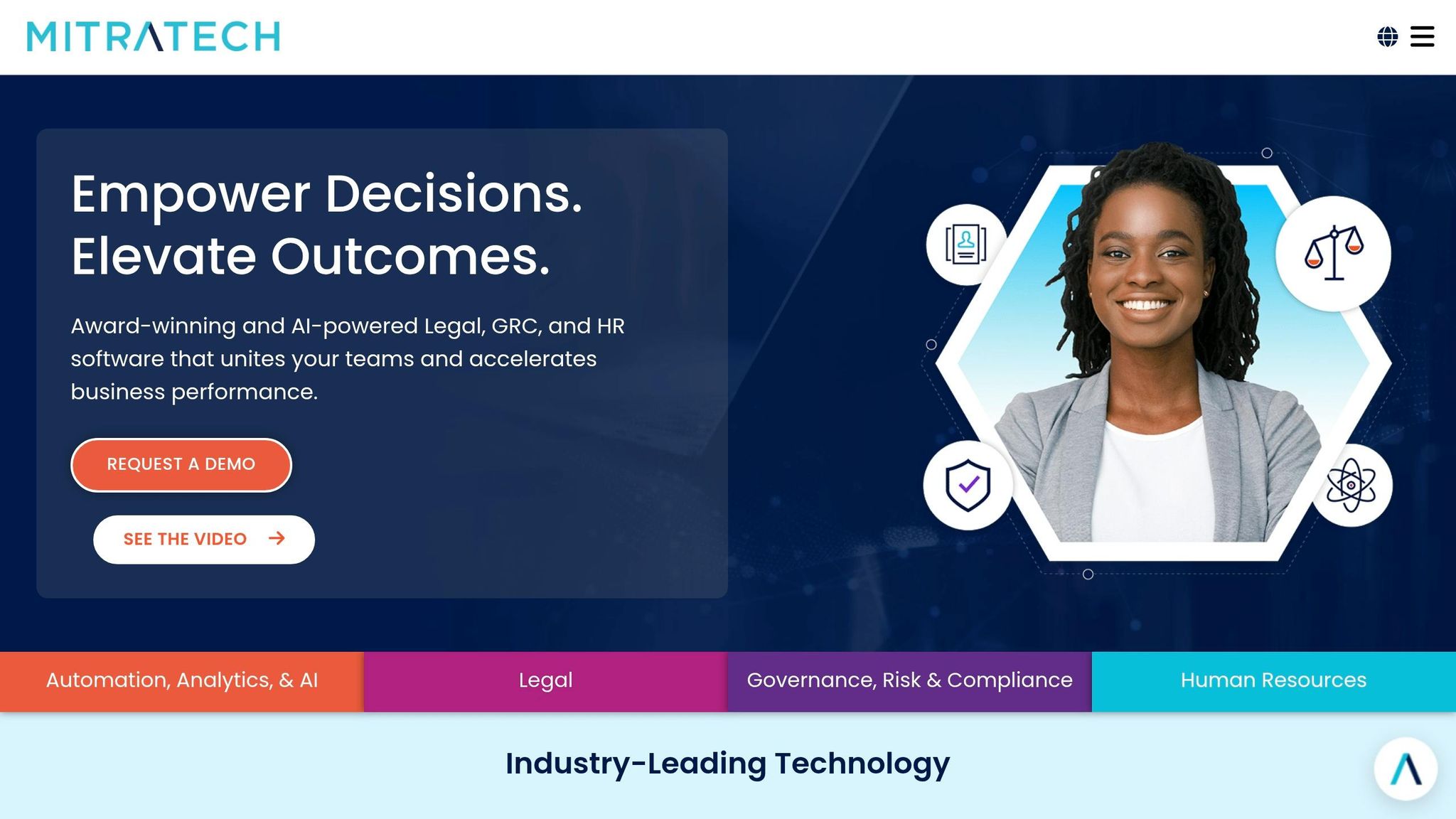
Alyne by Mitratech is a GRC platform tailored for small and medium-sized enterprises (SMEs). What sets it apart is its user-friendly design - no heavy IT setup required. Thanks to its no-code workflows, even non-technical staff can configure and manage the system, making it an excellent choice for smaller teams looking to streamline their compliance efforts.
The platform comes equipped with an AI engine that automatically interprets internal policies and operational documents, mapping them to over 60 regulatory standards like ISO 27001, GDPR, and SOC 2. It also offers access to over 1,500 templates to help kick off compliance processes. At the heart of this system is the ARIES™ AI agent, which simplifies complex GRC tasks, identifies risk patterns, and delivers actionable, data-driven insights:
"ARIES™ is built on structured, tested APIs - so when it draws on your GRC data, it's working from facts, not assumptions. Every response traces back to source data your team can verify." - Manuel Reil, CTO & CAIO, Mitratech GRC
This advanced AI functionality works hand-in-hand with Alyne’s seamless integration features.
Alyne takes a "connected, not consolidated" approach, meaning it integrates smoothly with existing tools like IT ticketing systems, document repositories, and HRIS platforms - no need for a complete system overhaul. For teams already using business intelligence tools, the PlatoBI DataShare feature connects Alyne data directly to platforms like Snowflake, giving compliance officers a unified view of risk data.
The platform also boosts audit readiness by collecting logs, evidence, and reports to create audit-ready obligation packs. It can even trigger automated risk remediation if evidence is missing. For instance, NeoDigital adopted Alyne and fully implemented its Risk Inventory process in just six weeks. This not only reduced internal reconciliation efforts but also improved the transparency and quality of their risk inventory:
"We were able to fully run our Risk Inventory process within Alyne, significantly reducing internal reconciliation and coordination efforts, as well as significantly increasing the transparency and quality of the risk inventory." - NeoDigital
Alyne’s capabilities make it a powerful tool for SMEs seeking to stay compliant without the need for extensive IT resources.
7. Fairly AI
Fairly AI, also known as Optro, zeroes in on one of the most pressing challenges in the AI space: governance and compliance. As regulations like the EU AI Act and ISO 42001 become stricter, this platform serves as a centralized resource for small and medium-sized enterprises (SMEs) to manage their AI systems, monitor compliance, and assess risks in real time.
One of its key features is its extensive regulatory coverage. Fairly AI simplifies compliance by automating processes across more than 25 frameworks, including the EU AI Act, ISO 42001, and the NIST AI Risk Management Framework (RMF). Instead of sifting through multiple documents manually, teams benefit from intelligent risk scoring and actionable recommendations, which help cut down on guesswork and speed up the compliance process.
When it comes to reporting, Fairly AI employs AI-driven workflows to handle various stages of the compliance process. These workflows are powered by specialized AI agents: one interprets the data, another conducts tests, and a third drafts the regulatory documentation. This results in ready-to-submit, regulator-compliant reports generated directly from your model files and industry templates, including SR 11-7 compliant formats.
The platform also creates a versioned evidence trail, connecting each AI-generated report back to its original data. Additionally, it automatically builds a detailed, traceable record for every AI application, ensuring that reviews and decisions are fully documented without requiring extra manual input. This functionality makes it easier for SMEs to manage compliance efficiently.
For businesses looking for a tool that simplifies regulatory reporting while also keeping AI systems compliant, Fairly AI is a practical option. It offers a structured solution to keep up with the rapidly evolving AI regulatory landscape - without the need for a dedicated compliance team.
How SMEs Should Choose an AI Tool for Regulatory Reporting
Choosing the right AI tool for regulatory reporting can feel like a daunting task, especially when faced with multiple options. The key is to align the tool with your specific compliance requirements - selecting one that doesn't meet your needs could lead to more complications down the road.
Begin with regulatory coverage. Start by mapping out the regulatory frameworks that apply to your business, such as GDPR, SOX, HIPAA, MiFID II, or Basel III. Prioritize the ones that are most relevant to your operations. Some tools focus on niche capabilities, while others provide broader compliance solutions for enterprise risk and financial reporting. The goal is to pick a tool that aligns with your actual obligations rather than simply opting for the most well-known standards.
Integration and auditability matter. A tool that doesn't integrate with your existing systems - like ERP, CRM, or GRC platforms - will only add unnecessary manual work. Look for solutions with pre-built connectors or open APIs for seamless integration. Traceability is equally critical; every data point and decision should be linked back to its original source, making audits far less stressful. As one Chief Compliance Officer from a financial institution shared:
"With their AI agents, we've cut our report preparation time by 70%, eliminated submission errors entirely, and now face audits with complete confidence."
Balance security with scalability. If your SME handles sensitive financial or personal data, choose tools with robust certifications like SOC 2 Type II or ISO 27001. Additionally, check if the tool supports private cloud or on-premise deployment if needed. On the scalability front, modular pricing models are a smart choice. Look for solutions that let you pay only for the features you currently need, with the flexibility to add more as your compliance requirements evolve - this avoids locking your business into costly enterprise contracts too early.
It's rare to find one tool that addresses every need perfectly. Many SMEs find success by combining two or three complementary tools. For instance, you might use Workiva for structured financial disclosures, MindBridge for identifying anomalies in transaction data, and Fairly AI for governance compliance. Building a customized compliance stack ensures that each tool works together to simplify regulatory reporting and meet your unique requirements.
Next, we'll dive into how SMEs can use AI for Businesses to create the ideal compliance stack.
How AI for Businesses Helps SMEs Find the Right Tools
Once you've outlined your compliance requirements, the next challenge is finding tools that fit your budget and technical needs - without wasting precious time. This is where AI for Businesses steps in. It offers a curated directory specifically designed for SMEs and scale-ups, eliminating the need to comb through countless vendor websites. With features like filtering by compliance needs, data privacy standards, integration options, and pricing tiers, it simplifies the search for the perfect tools.
When it comes to regulatory reporting, choosing the right tool can make or break your compliance strategy. AI for Businesses helps you zero in on tools tailored to your specific industry and risk profile. This is especially helpful when you're piecing together a multi-tool compliance stack. By streamlining the discovery process, it sets the stage for smoother implementation.
But the platform doesn’t stop at discovery - it also supports a structured approach to adopting new tools. Here’s a practical framework to follow: start by focusing on one high-risk process (like preparing regulatory reports), test two or three tools using a standardized checklist, maintain manual oversight during the pilot phase, and then track costs and performance quarterly. The potential efficiency gains are hard to ignore. For example, AI-powered tools can slash report preparation time from one to two weeks down to about 30 minutes. Additionally, automated data validation tools have demonstrated a 99.2% accuracy rate for regulatory compliance. By relying on a curated, systematic process instead of trial and error, small and mid-sized teams can achieve these impressive results without the usual headaches.
Conclusion
Regulatory reporting doesn't have to be overwhelming when you have the right tools in place. The seven AI tools discussed earlier address various aspects of compliance, including data validation, audit trails, narrative generation, and real-time risk monitoring.
What used to take weeks can now be done in just 30 minutes, thanks to AI compliance agents - cutting time by up to 98%. Businesses that adopt these tools report a 60–90% drop in costs and effort, along with almost flawless submission accuracy and complete audit traceability.
For small and medium-sized enterprises (SMEs), scalability is a game-changer. Cloud-based, pay-as-you-grow models allow SMEs to adopt these tools without hefty upfront IT investments. Free trials and short-term pilot programs make it easier to assess the return on investment.
"By 2026, AI workflow automation has become the gold standard for regulatory reporting. Manual processing is simply too slow, error-prone, and risky in a world where reporting deadlines and audit scrutiny are tighter than ever." - Priya Mathur, Chief Compliance Officer
These results highlight the importance of choosing the right tool to meet your compliance challenges. Start small by focusing on a single high-risk process, test an AI tool, and evaluate its performance before scaling up. With AI-powered solutions, SMEs can navigate regulatory requirements more effectively. Visit AI for Businesses to find tools tailored to your compliance needs, system compatibility, and budget.
FAQs
Which AI tool fits my specific regulations (SEC, SOX, CCPA)?
When it comes to compliance with regulations like SEC, SOX, and CCPA, several AI tools are designed to simplify and streamline the process. Here are some key options:
- Workiva: This tool connects SEC reporting with SOX workflows, offering audit-ready documentation to make compliance more efficient.
- Vensa: Focused on automating SOX testing, Vensa also ensures adherence to GDPR and CCPA requirements.
- Lyzr: A versatile solution that supports multiple mandates, including SEC, SOX, GDPR, HIPAA, and FINRA, with dynamic mapping capabilities.
- 10clear: Specializes in automating SEC and GAAP checklist disclosures, saving time and reducing errors.
- Intelligize and Quillon: These tools are excellent for research and benchmarking, particularly when working with EDGAR filings.
Each of these tools brings unique strengths to the table, making it easier for organizations to navigate complex regulatory landscapes.
Can these tools connect to my ERP and Excel without heavy IT work?
Many AI reporting tools work effortlessly with systems like NetSuite, SAP, and Tally, as well as databases and cloud-based spreadsheets. For example, tools like Velixo Intelligence and ElyxAI integrate directly into Excel, allowing users to pull live data for reporting without needing complicated setups. These tools typically provide straightforward options, such as file uploads or pre-built connectors, making it easy for small and medium-sized enterprises (SMEs) to automate workflows without requiring heavy IT support.
What security certifications should I require for compliance data?
If you're looking to safeguard compliance data and stay audit-ready, it's crucial to focus on certifications that match your industry and meet your customers' expectations. Here are some of the most widely recognized standards:
- SOC 2 Type II: Covers security, availability, confidentiality, and privacy, ensuring your systems meet high operational standards.
- ISO 27001: Focuses on maintaining strong information security management practices.
For specific industries, there are additional certifications to consider:
- HIPAA: Essential for protecting healthcare-related information.
- PCI DSS: Designed to secure payment transactions and protect cardholder data.
- GDPR or CCPA: Critical for managing data privacy and meeting regional regulatory requirements.
In addition to these, newer frameworks like ISO 42001 and NIST AI RMF are gaining attention. These address governance and risk management in artificial intelligence, reflecting the growing need for responsible AI practices.